U.S. Embassies and Consulates
U.S. Embassy — La Paz, Bolivia


The U.S. Embassy in La Paz represents the United States in Bolivia and maintains engagement with Bolivian partners and communities despite a relationship shaped by past expulsions of the U.S. ambassador, law-enforcement, and development agencies. The State Department identifies U.S. work with Bolivians on human rights, entrepreneurship, and cultural and educational initiatives, alongside consular assistance and visa services.
U.S. Consulate General — Toronto, Canada

Photo: Aquintero82 / Wikimedia Commons — CC0 1.0.
The U.S. Consulate General Toronto represents the United States in the Toronto consular district and helps strengthen the U.S.–Canada relationship through consular services, public outreach, and engagement with government, business, and community partners.
Located in downtown Toronto, the Consulate assists U.S. citizens and visa applicants and supports professional, educational, commercial, and cultural ties across the region.
CONSULATE ACTIVITIES:
- Assist U.S. citizens with passport, citizenship, notarial, and emergency services.
- Provide visa services and other consular information for eligible applicants.
- Support bilateral engagement and outreach with local and regional partners.
- Advance commercial, educational, cultural, and professional connections.
- Communicate safety information and provide services to the traveling public.
U.S. Consulate — Vladivostok, Russia


Consular Services. The Consulate's highest priority is the welfare and whereabouts of American citizens in our Consular District. Our Consular Section provides passport and other services to American travelers and resident expatriates. The Consulate also issues visas to Russian residents who wish to travel to the U.S.
History
Following the Cold War, the United States initiated a policy of positive engagement with the new Russian Federation. A key component of this policy is the expansion of contacts in Russia's heartland beyond Moscow and St. Petersburg. The country's many regions, which span eleven time zones, continue to grow in individual importance.
The Russian Far East, Russia's "window on the Orient", has remained an area of strategic importance ever since eastward expansion reached its terminus in the mid-19th century. The area's abundant natural resources have long fueled the Russian economy, as they do today. Fur, timber, and precious metals encouraged the first settlers to make the trans-Siberian trek. Access to deposits of ore, coal, and rich oil and gas reserves coupled with determined development transformed the area into a vast industrial and military zone during the last century. Today, home to multinational energy companies, bustling ports, and enormous factories, the Far East will continue to be an integral part of Russia's post-Cold War development.
Because of its concentration of defense-related industries, most of the Far East remained closed to westerners for decades during the Cold War. Combined with the fact that most residents were restricted from traveling abroad, exposure to outside cultures and ideas was strictly limited. In 1992, thanks to lobbying efforts by local leaders, the Russian Federation opened the area to foreigners and outside investment. The United States has long been at the forefront of western efforts to establish contacts in the region.
The U.S. Consulate General in Vladivostok was officially reestablished on September 22, 1992, within months of the "opening" of a city closed to even Russian citizens for 30+ years. Seventy years earlier, it was the site of the last U.S. diplomatic mission to be closed as a result of the Soviet Revolution.
The capital of Primorsky Krai, Vladivostok was chosen as the site for the new regional U.S. Consulate for several reasons. It is the largest city in Far Eastern Russia (an industrial and trade center of over 700,000 people), serves as the home port of the Russian Navy's Pacific Fleet, and sits just north of Japan, China and the Koreas. Since 1992, close to a dozen countries have established diplomatic outposts in the city.

U.S. Embassy — Brussels, Belgium

The U.S. Embassy in Brussels manages the bilateral relationship with Belgium, a founding NATO member and host of both NATO and European Union headquarters. Its work brings together security and law-enforcement cooperation, trade and investment, research partnerships, and cultural and educational exchange, with consular services for U.S. citizens and visa applicants.
U.S. Embassy — Suva, Fiji
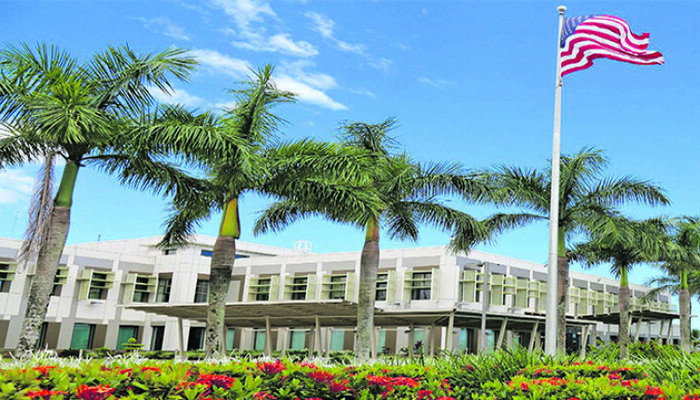
Photo: Sigatoka Electric Ltd.
The U.S. Embassy in Suva represents the United States in Fiji and supports regional engagement with Kiribati, Nauru, and Tuvalu.
The Mission works with governments, regional organizations, civil society, and private-sector partners while assisting U.S. citizens and eligible visa applicants.
EMBASSY ACTIVITIES:
- Support diplomatic engagement with Fiji, Kiribati, Nauru, and Tuvalu.
- Advance regional security, maritime cooperation, and stability.
- Promote trade, investment, and sustainable economic growth.
- Support climate resilience, health, education, and exchange programs.
- Provide consular, passport, and visa services and assist U.S. citizens.
U.S. Embassy — Belmopan, Belize

Photo: U.S. Department of State / National Museum of American Diplomacy — public domain.
The U.S. Embassy in Belmopan represents the United States in Belize and supports the U.S.–Belize partnership. The two countries cooperate on security, prosperity and governance, democracy and human rights, migration management, and climate change.
The Mission provides consular and visa services and works with Belizean government, civil-society, and community partners on education, public diplomacy, economic opportunity, and regional security.
EMBASSY ACTIVITIES:
- Provide consular, passport, and visa services.
- Assist U.S. citizens in Belize.
- Support diplomatic cooperation on security, prosperity, and governance.
- Promote trade, investment, entrepreneurship, and professional exchange.
- Build educational, cultural, and public-diplomacy ties.
U.S. Embassy — Mexico City, Mexico

Photo: Aquintero82 / Wikimedia Commons, CC0 1.0.
The U.S. Embassy in Mexico City represents the United States in Mexico and supports diplomatic engagement between the two countries.
The Mission serves U.S. citizens and visa applicants while working with Mexican partners on economic cooperation, public security, education, culture, and people-to-people ties.
EMBASSY ACTIVITIES:
- Support diplomatic engagement between the United States and Mexico.
- Provide consular, passport, and visa services.
- Promote trade, investment, and economic cooperation.
- Work with partners on public security and rule-of-law priorities.
- Build educational, cultural, and professional exchanges.
U.S. Embassy — Sarajevo, Bosnia & Herzegovina

The U.S. Embassy in Sarajevo represents the United States in Bosnia and Herzegovina, where the United States helped broker the 1995 Dayton Peace Agreement and continues to support its implementation. The mission works toward multiethnic democratic institutions, rule of law, economic opportunity, and Euro-Atlantic integration, while its consular section supports U.S. citizens and visa applicants.
U.S. Embassy — Managua, Nicaragua

Photo: U.S. Embassy in Nicaragua / Wikimedia Commons — public domain.
The U.S. Embassy in Nicaragua represents the United States in Managua and serves as a point of contact on matters of mutual interest between the United States and Nicaragua.
The Mission supports U.S. citizens, provides consular and visa information, and engages with local partners while sharing official travel, safety, and public-service information.
EMBASSY ACTIVITIES:
- Assist U.S. citizens with passport, citizenship, notarial, and emergency services.
- Provide visa information and related consular services for eligible applicants.
- Share official travel, safety, and public-service information.
- Maintain diplomatic engagement on matters of mutual interest.
- Support educational, cultural, and people-to-people connections.
U.S. Embassy — San Salvador, El Salvador

Photo: Jesse Michael Nix / Wikimedia Commons, CC BY 2.0.
The U.S. Embassy in San Salvador represents the United States in El Salvador and works with Salvadoran government, private-sector, and community partners to advance the bilateral relationship.
The Mission provides consular and visa services, supports economic cooperation, and leads public-diplacy programs that expand educational, cultural, and professional exchanges.
EMBASSY ACTIVITIES:
- Support diplomatic engagement between the United States and El Salvador.
- Provide passport, notarial, and emergency services for U.S. citizens.
- Process visa services for eligible travelers to the United States.
- Promote sustainable growth, trade, investment, and commercial cooperation.
- Lead education, culture, information, and professional exchange programs.
U.S. Embassy — Beirut, Lebanon
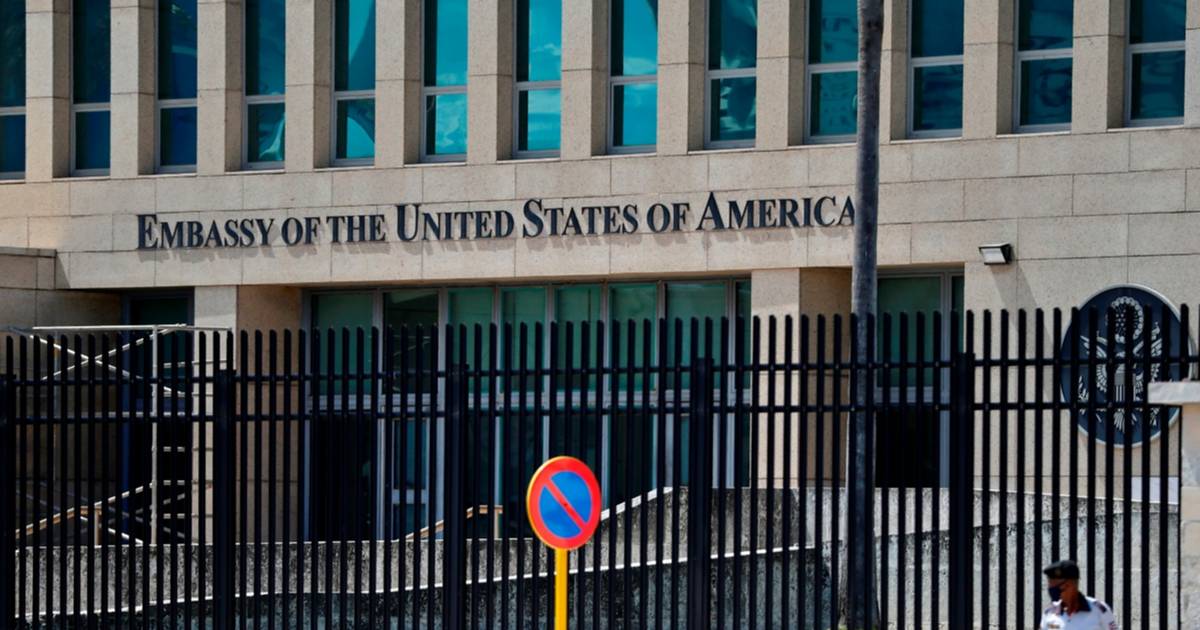
Photo: Meridiano.
U.S. Embassy Beirut represents the United States in Lebanon. It works to support U.S. citizens, sustain bilateral cooperation, and advance a stable, sovereign, and prosperous Lebanon.
The Embassy works with Lebanese institutions, civil society, and international partners on diplomacy, security, economic opportunity, education, cultural preservation, and people-to-people exchange.
EMBASSY ACTIVITIES:
- Support U.S. citizens through consular services and emergency assistance.
- Advance Lebanon’s sovereignty, stability, and security.
- Encourage economic and structural reforms that expand opportunity and resilience.
- Support education, English-language, and exchange programs.
- Partner on cultural-heritage preservation and community programs.
U.S. Embassy — Port Moresby, Papua New Guinea

Photo: U.S. Marine Corps / 2nd Lt. Anne Pentaleri via DVIDS — public domain.
The U.S. Embassy in Port Moresby represents the United States in Papua New Guinea and advances diplomatic cooperation between the two countries.
The Mission works with Papua New Guinean partners, assists U.S. citizens, and supports regional engagement with Solomon Islands and Vanuatu.
EMBASSY ACTIVITIES:
- Advance diplomatic engagement and policy coordination with Papua New Guinea.
- Support trade, investment, and economic partnerships.
- Promote regional security cooperation and Indo-Pacific partnership.
- Expand education, cultural exchange, and public-outreach programs.
- Provide consular, passport, and visa services and assist U.S. citizens.

